Thriving in the Desert: Lessons from the Tamarisk Tree
In a world that often feels like a spiritual desert—dry, harsh, and unforgiving—how do we not just survive, but thrive? The answer lies in understanding a remarkable tree that grows in the Middle Eastern deserts: the tamarisk tree.
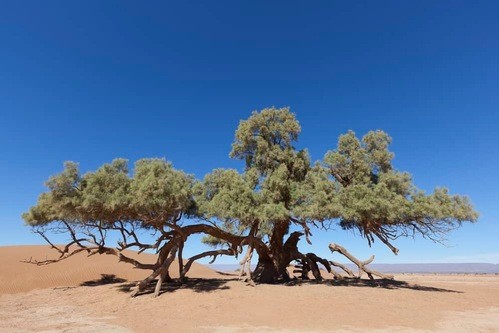
Ancient travelers called it the "survival tree." When crossing scorching sands under relentless heat, weary caravans would search desperately for this particular tree. Why? Because wherever a tamarisk tree stood, they knew water could be found beneath the surface. Even in the most barren landscape, this tree had discovered hidden resources.
Roots That Go Deep
The psalmist wrote beautifully about this principle: "And he shall be like a tree planted by the rivers of water, that bringeth forth his fruit in his season. His leaf shall not wither, and whatsoever he doeth, he shall prosper" (Psalm 1:3).
The secret of the tamarisk tree isn't found in its environment—it's found in its roots. While the desert surface offers nothing but heat and sand, this tree sends its roots down deep, far beneath the barren ground, until it finds hidden water sources that sustain it through every season.
This is the calling of every believer: to sink roots so deep into the presence of God that the drought around us becomes irrelevant. When we're connected to the right source, the circumstances on the surface lose their power to destroy us.
The secret of the tamarisk tree isn't found in its environment—it's found in its roots. While the desert surface offers nothing but heat and sand, this tree sends its roots down deep, far beneath the barren ground, until it finds hidden water sources that sustain it through every season.
This is the calling of every believer: to sink roots so deep into the presence of God that the drought around us becomes irrelevant. When we're connected to the right source, the circumstances on the surface lose their power to destroy us.
What the Desert Tries to Do
The desert has a strategy. It tries multiple approaches to destroy the tree:
First, it withholds water. Rain is rare, moisture is scarce, and conditions are hostile. But the tamarisk doesn't panic—it simply digs deeper. When you're connected to an eternal source, temporary droughts don't determine your destiny.
Second, it turns up the heat. Relentless temperatures beat down day after day, scorching everything in sight. Yet here's what's fascinating: the heat doesn't destroy the tree—it reveals the depth of its roots. Shallow faith fears pressure. Deep faith simply survives. The trials we face don't create our character; they reveal it.
Third, it tries to bury the tree. Violent sandstorms blow across the desert, piling sand around the tree until it's nearly covered. But the tamarisk has an unusual response: it simply grows higher. What the desert meant to bury it with becomes the very platform that lifts it up.
Think about that old farmer's mule that fell into a dry well. When the farmer decided to bury it, the mule did something remarkable—with every shovel of dirt that landed on its back, it shook it off and stepped up. Shovel by shovel, the pile grew until the mule simply walked out free. What was meant to bury it became the means of its escape.
Finally, the desert tries to isolate the tree. Deserts are lonely places where few trees survive. But tamarisk trees often grow in small groves, creating shade and protection for one another. Believers were never meant to survive deserts alone.
First, it withholds water. Rain is rare, moisture is scarce, and conditions are hostile. But the tamarisk doesn't panic—it simply digs deeper. When you're connected to an eternal source, temporary droughts don't determine your destiny.
Second, it turns up the heat. Relentless temperatures beat down day after day, scorching everything in sight. Yet here's what's fascinating: the heat doesn't destroy the tree—it reveals the depth of its roots. Shallow faith fears pressure. Deep faith simply survives. The trials we face don't create our character; they reveal it.
Third, it tries to bury the tree. Violent sandstorms blow across the desert, piling sand around the tree until it's nearly covered. But the tamarisk has an unusual response: it simply grows higher. What the desert meant to bury it with becomes the very platform that lifts it up.
Think about that old farmer's mule that fell into a dry well. When the farmer decided to bury it, the mule did something remarkable—with every shovel of dirt that landed on its back, it shook it off and stepped up. Shovel by shovel, the pile grew until the mule simply walked out free. What was meant to bury it became the means of its escape.
Finally, the desert tries to isolate the tree. Deserts are lonely places where few trees survive. But tamarisk trees often grow in small groves, creating shade and protection for one another. Believers were never meant to survive deserts alone.
Two Men, One Tree, Different Outcomes
Scripture gives us a fascinating study in contrasts. In Genesis 21:33, we read that Abraham "planted a grove in Beersheba" and "called on the name of the Lord there," naming that place "Everlasting God." Abraham planted a tamarisk tree and used it as a place of worship.
Later, we find King Saul sitting under a similar tree in 1 Samuel 22:6, "having his spear in his hand, and all his servants were standing about him." Saul sat under his tree plotting against David, consumed by jealousy and suspicion.
Same kind of tree. Two completely different outcomes.
The lesson? The tree was never the issue. The environment was never the issue. The difference wasn't the shade or the location—it was the condition of the heart of the man sitting under the tree.
Abraham used his tree as an altar. Saul used his as headquarters for jealousy. One heart was surrendered; the other was soured. What's over you matters far less than what's in you.
Later, we find King Saul sitting under a similar tree in 1 Samuel 22:6, "having his spear in his hand, and all his servants were standing about him." Saul sat under his tree plotting against David, consumed by jealousy and suspicion.
Same kind of tree. Two completely different outcomes.
The lesson? The tree was never the issue. The environment was never the issue. The difference wasn't the shade or the location—it was the condition of the heart of the man sitting under the tree.
Abraham used his tree as an altar. Saul used his as headquarters for jealousy. One heart was surrendered; the other was soured. What's over you matters far less than what's in you.
Creating an Oasis
Here's the beautiful progression: one tamarisk tree that survives the desert becomes two, then three, then a grove. And that grove creates an oasis—a place where weary travelers find rest, where the thirsty find water, where the exhausted find shade.
That grove of trees stops erosion. It makes an environment that was once unlivable now livable. And it all starts with one tree that refused to let the desert determine its destiny.
Abraham understood something profound when he planted that tree. He wasn't just planting for himself—he was planting something that would outlive him, something his children and grandchildren would benefit from. He was building for generations.
Too many people live for comfort. But people of faith live for impact that extends beyond their lifetime. They understand that the blessings of the Lord are for a thousand generations.
That grove of trees stops erosion. It makes an environment that was once unlivable now livable. And it all starts with one tree that refused to let the desert determine its destiny.
Abraham understood something profound when he planted that tree. He wasn't just planting for himself—he was planting something that would outlive him, something his children and grandchildren would benefit from. He was building for generations.
Too many people live for comfort. But people of faith live for impact that extends beyond their lifetime. They understand that the blessings of the Lord are for a thousand generations.
You Don't Sound Like What You've Been Through
Perhaps the most powerful testimony is this: when you've been through the fire but you're still talking faith, when you've been buried but you're still standing, when the heat has been turned up but your leaves haven't withered—you become living proof that there's a source this world knows nothing about.
Job's wife looked at him in the midst of his suffering and said, "Even your breath troubles me." She wasn't commenting on his need for a mint—she was troubled because Job was in a season where he should have been talking defeat, but he was still talking victory.
That's what troubles the enemy: believers who don't sound like what they've been through. Dry seasons don't destroy us—they simply reveal where we've been drinking.
Job's wife looked at him in the midst of his suffering and said, "Even your breath troubles me." She wasn't commenting on his need for a mint—she was troubled because Job was in a season where he should have been talking defeat, but he was still talking victory.
That's what troubles the enemy: believers who don't sound like what they've been through. Dry seasons don't destroy us—they simply reveal where we've been drinking.
The Declaration
So here's the declaration for everyone who feels surrounded by desert conditions:
We will not be dry people in a dry world. We will be rooted in living water. Though the desert surrounds us, we will not wither. Though the heat rises, we will not fear. Our roots run deep into the presence of God.
Where others see dryness, we carry life. Where others see hopelessness, we release faith. Where others are weary, they will find rest among us.
We will not just survive the desert—we will become the oasis that refreshes our cities, our families, and our generation.
The desert doesn't determine your destiny. The river does. And when you're planted by the waters, your leaf shall not wither, and whatsoever you do shall prosper.
Come on, soul—don't get shy. Lift up your song. You've got a lion inside those lungs. Get up and praise the Lord, because you don't sound like what you've been through.
We will not be dry people in a dry world. We will be rooted in living water. Though the desert surrounds us, we will not wither. Though the heat rises, we will not fear. Our roots run deep into the presence of God.
Where others see dryness, we carry life. Where others see hopelessness, we release faith. Where others are weary, they will find rest among us.
We will not just survive the desert—we will become the oasis that refreshes our cities, our families, and our generation.
The desert doesn't determine your destiny. The river does. And when you're planted by the waters, your leaf shall not wither, and whatsoever you do shall prosper.
Come on, soul—don't get shy. Lift up your song. You've got a lion inside those lungs. Get up and praise the Lord, because you don't sound like what you've been through.
Recent
The Curse Stops Here: How One Person Can Change a Family Forever
July 26th, 2026
A New Me: When Jesus Sets You Free
July 19th, 2026
From Death to Freedom: When Jesus Calls You Out of the Grave
July 12th, 2026
From One Kingdom to Another: The True Meaning of Freedom
July 5th, 2026
When Life Gets Hard, Where Do You Run?
June 21st, 2026
Archive
2026
January
February
March
The Shepherd Who Loves You: Living in the Beauty of Divine RelationshipThriving in the Desert: Lessons from the Tamarisk TreeWhen Revival Begins: The Power of Prayer to Transform EverythingYou Are IN: Living in the Power of RevivalThe Transformative Power of Prayer: When Heaven Touches EarthWhen Praise Becomes Your Weapon: Living Beyond Sunday Morning
April
May
June
2025
November
No Comments